Yann LeCun raised a billion dollars in Paris to bet against the models everyone uses
AMI Labs, the start-up Yann LeCun founded after leaving Meta, has raised $1.03 billion for AI that learns from the physical world instead of from text. It is Europe's largest seed round and a serious bet that today's language models are a dead end. It will not change what you buy this year.

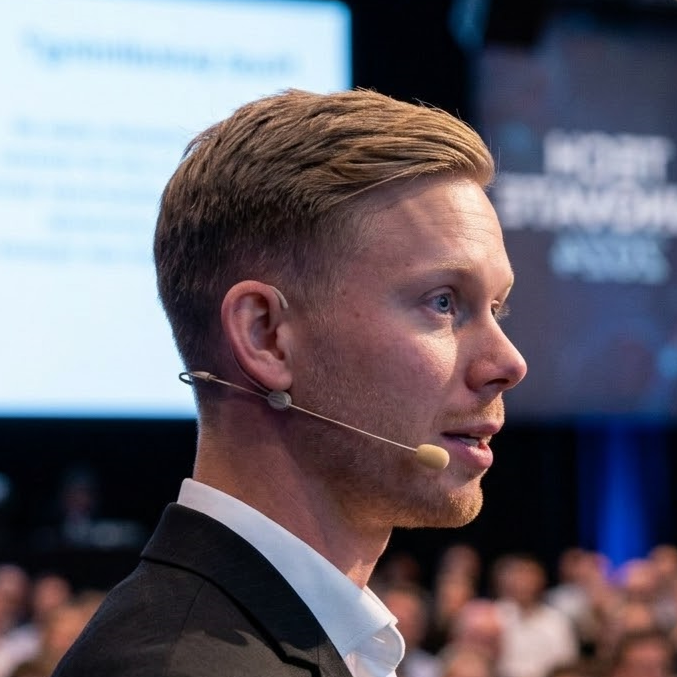
AMI Labs, the company Yann LeCun started after leaving Meta, announced on March 10 that it has raised $1.03 billion at a $3.5 billion pre-money valuation. It is the largest seed round ever raised in Europe. The company is headquartered in Paris, with offices planned in New York, Montreal and Singapore, and it is building what LeCun calls world models: AI that learns how the physical world behaves rather than predicting the next word in a text. LeCun has spent years arguing that large language models will not lead to human-level intelligence. He now has a billion dollars to prove it.
Who is behind it
The round was co-led by Cathay Innovation, Greycroft, Hiro Capital, HV Capital and Bezos Expeditions, with Nvidia, Samsung, Toyota Ventures and Temasek among the other investors, according to TechCrunch. Individual backers include Eric Schmidt and Tim Berners-Lee. LeCun is executive chairman. The chief executive is Alexandre LeBrun, who previously ran the French health AI company Nabla, which is also AMI’s first partner. Much of the founding team comes from Meta’s AI research group.
The technical approach is JEPA, short for Joint Embedding Predictive Architecture, which LeCun proposed in 2022. The idea is to train a system to predict abstract representations of what happens next in the world, from video and sensor data, instead of predicting pixels or words. LeCun calls language models a statistical illusion, in The Next Web’s account, because they learn how people describe the world rather than how it works.
A long bet, stated honestly
What I find most credible about AMI is how openly it talks about time. LeBrun told TechCrunch that this is not a typical applied AI start-up that can ship a product in three months. LeCun expects talks with corporate partners within one to two years and “fairly universal” intelligent systems in three to five. The company says it will publish its research and release code as open source.
That openness about the timeline cuts both ways. A seed round of this size buys years of research and a great deal of compute, and investors are paying for the chance that LeCun is right about the limits of language models. If he is, the companies spending hundreds of billions on scaling them are building on the wrong foundation. If he is wrong, or right but slower than the market, AMI is an expensive research lab. I would not bet against LeCun’s scientific judgement, which has been right before when it was unfashionable: he shared the 2018 Turing Award for work on neural networks that much of the field had dismissed. I would bet against any promise of general intelligence on a five-year schedule, including this one.
What it means for Europe
LeCun presents AMI as one of the few frontier labs that is neither Chinese nor American. With Mistral already in Paris, France now hosts two of the most credible attempts to build frontier AI in Europe, and they are betting on different things. Mistral competes on the same kind of models the Americans build, with efficiency and European control of data as selling points. AMI is betting on a different kind of model altogether.
The funding itself is less European than the headline. HV Capital is German and Hiro Capital is based in London, but much of the money comes from the US and Asia, including Bezos Expeditions, Nvidia, Samsung, Toyota and Singapore’s Temasek. That is not a criticism. It shows that Europe can keep a frontier lab when the founders want to be here, but still mostly cannot fund one on its own.
For Danish and other European companies there is also a practical point. Talent follows labs like this. A research organisation of AMI’s size in Paris will pull in researchers who might otherwise have gone to London or California, and some of them may later start companies nearer home.
What a business should do with this
Nothing changes in your AI plans this year. The models you can buy and deploy today are language models, and they will keep improving on their own schedule. AMI does not expect to have a product for some time.
If your business deals with the physical world, such as manufacturing, logistics, robotics, energy or health, it is worth following closely. World models are aimed at exactly the problems where language models are weakest: predicting what will happen when something moves, breaks or changes state. A company that understands the approach early will be better placed to test it when it becomes usable.
And be careful with anyone who tells you the current generation of AI is a dead end, or that it is about to become general intelligence. One of the best-known researchers in the field has just raised a billion dollars on the first claim. The largest companies in the world are spending far more on the second. Both groups are guessing about what happens after the tools you can use now, which are the ones that should shape this year’s decisions.


